
Importance de l’enseignement de l’histoire militaire au Sénégal et enjeux du 50e Congrès de la Commission internationale d’histoire militaire (CIMH) de Dakar (1er – 5 septembre 2025)
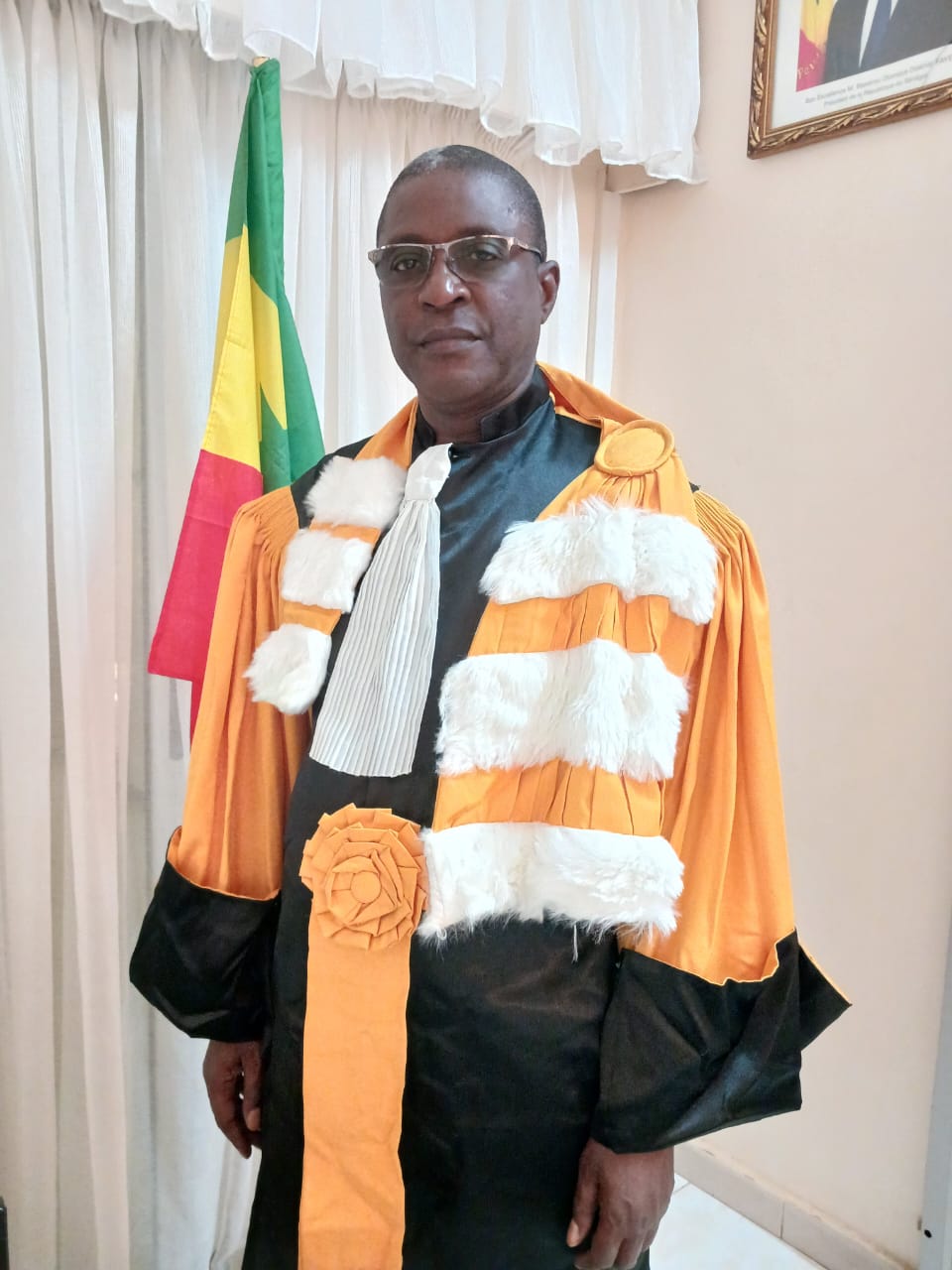
Mor Ndao ,Professor Full Professor of Universities Inspector General of Education and Training President of the Senegalese Commission of Military History Doctor of History, State Doctor of Letters and Human Sciences Director of the Doctoral School Studies on Man and the ED ETHOS Society
An important element of military culture, military history can be defined as a branch of historiography whose aim is to study war in its various military components (military personnel, recruitment, conduct of military operations, military institution and administration), and its impact on politics, economics, culture, geography and society. Military history occupies an important place in the education and training of the soldier. His training role in the career of the officer and responsible citizen is no longer to be demonstrated. Its teaching, knowledge and feedback are a major tool for analysis and understanding in the preparation of operations. In Senegal, military history represents a vast field of study which, for some time, has begun to be cleared and explored by historical research. Indeed, Senegal is the heir to a long tradition of military history dating back to the era of the great empires of medieval Sudan and Senegambia. The Senegalese armed forces are thus marked by multiple and diverse influences. History, geography, Islam, trans-Saharan trade, Atlantic openness and colonization have combined to give original structures to our armed forces. The Senegalese armed forces, in the aftermath of independence, are entering a multi-faceted era of openness and military cooperation, focusing on
emblematic of Senegambian and African history are present in the general elementary and middle secondary education programmes.
The teaching of Senegal's military history is becoming an important issue for our country in the face of young people often losing reference points and references in a world of multiple, complex and increasingly uncertain stakes.
The establishment of the LYNAQE (National Army High School for Quality and Equity) is part of the strengthening of the academic and civic excellence of Senegalese youth through training and education in values and citizenship.
The teaching of military facts and important events known to our country, such as the Thiaroye massacre on 1 December 1944, the resistance of the women of Nder, Lat Dior, Alboury Ndiaye, Maba Diakhou Ba, Djignano Bassene, and Aline Sitoe Diatta, helps to heal collective memory, consolidate our sovereignty, establish a culture of peace and strengthen our patriotic feelings. The teaching of military history allows Senegalese officers to receive a solid historical culture enabling them to understand current and regional and global geopolitical issues in this context, especially marked by
military coups,
war, terrorism, ethnic and identity conflicts, etc. From 1 to 5 September 2025, Senegal, through the Senegalese Commission for Military History (CSHM), created by order of the Ministry of Armed Forces (No. 16553 of 30 September 2013), will host the 50th Congress of the International Commission for Military History. This international meeting offers the opportunity to gather
in Dakar experts in military history (Universities, retired military and active) from around the world to discuss the theme « Rebellions and sovereignty in contemporary times (from 1800 to the present) » around four axes:
- Axis 1: typology of rebellions: forms and characters of rebellions
- Axis 2: Factors, causes, origins of rebellions
- Axis 3: Rebellion-proof sovereignty
- Axis 4: the consequences of rebellions Rebellion can be defined as any act of
dissent, insurrection, revolt, separatism, slinging or uprising. It refers to violent resistance to a person who is the custodian of a public authority or who is entrusted with a public service mission, in the performance of his or her duties, for the enforcement of laws, orders of the public authority, decisions or warrants of justice. Individual or collective, organized or disorganized, passive or active, rebellion, in its forms, is as old as human societies. Violence, a common feature of humanity, is the daily lot of human societies.
From the 19th century onwards, the rise of the industrial revolution, the expansion of colonial powers, the development of colonialism and imperialism inaugurate a series of crises (revolts, rebellions, secessions) both local and international that will be subject to a severe test of public order.
Post-colonial Africa is ravaged by a series of coups d'états,
rebellions and secessions (Katanga)
1960-1964, Biafra in 1967-1970... which threatened the stability of the continent. The 1994 Rwandan genocide, the rebellions in the Democratic Republic of the Congo since 1960, Ethiopia, Eritrea, Sudan, the Central African Republic, Chad, Mali, Niger, Burkina Faso, southern Senegal with MFDC, etc., undermine the foundations of national cohesion. In the Sahel, the porosity of borders and the ease of arms circulation following the overthrow of Gaddafi in Libya open the door to instability that, over time, benefits the jihadist movements. Thus, the 19th and 20th centuries are characterized by rebellions that
the basis of the
States and pose the problem of current geopolitical reconfigurations in America, Europe, Asia and Africa. Therefore, the choice of the theme of this congress, « Rebellions and sovereignty in contemporary times (from 1800 to the present) »find its relevance.
The International Commission on Military History (ICMH), founded in 1938, is an international non-profit and non-governmental organization affiliated with the International Committee on Historical Sciences. « The aim of the ICDH is to promote and coordinate studies and research in the field of military history in the broadest sense, in a spirit of international friendship, so that researchers can better know each other, cooperate and share the results of their work. ». ICMH promotes research, the publication of military history teaching on a global scale.
ICMH focuses on military history in the broad sense: history of war, military campaigns, armed forces, military thinking, diplomatic aspects of conflict, causes and effects of war, defence economy, civil-military relations, military technology, military leadership and the demography of the armed forces. CIMH is structured into governing bodies, national commissions and specialized committees (archives, bibliographical, pedagogical). Each national commission is autonomous and also sponsors military history activities within its own country.
The 50th Congress of the International Commission of Military History planned in Dakar is all the more important, since in addition to the celebration of its 50th anniversary, the office will be renewed in Senegal. This reflects the importance of this Dakar Congress, the second in sub-Saharan Africa after Cameroon held in 2017.