

Call for papers – 50th Congress of the International Commission on Military History: Rebellions and Sovereignty in the Contemporary Age (1800 to today)
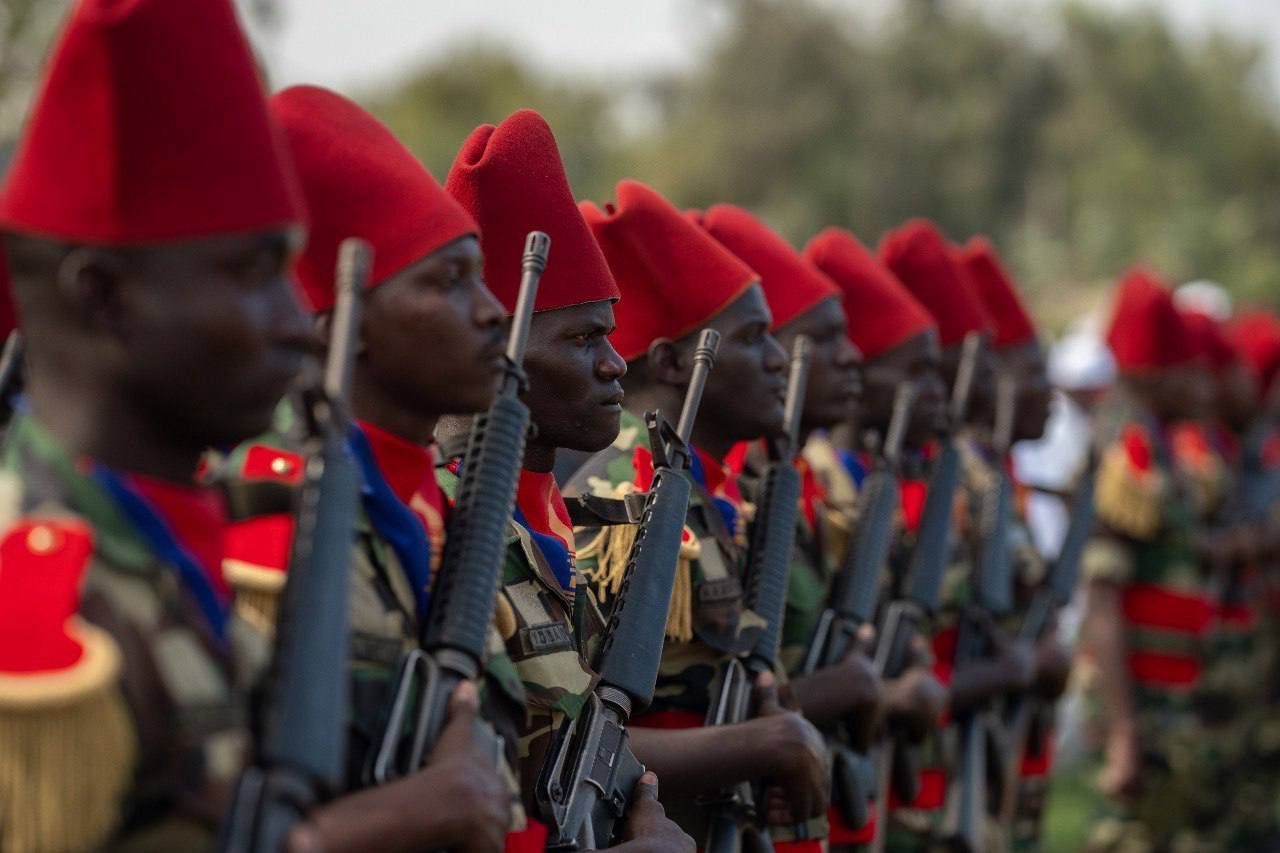
50th Congress of the International Commission of Military History
Theme:
Rebellions and sovereignty in the contemporary era (1800 to the present)
Dakar, Senegal 1: -5 September 2025
Argument
Rebellion can be defined as any act of dissent, insurrection, revolt, separatism, sling or uprising. It refers to violent resistance to a person who is the custodian of a public authority or who is entrusted with a public service mission, in the performance of his or her duties, for the enforcement of laws, orders of the public authority, decisions or warrants of justice. Individual or collective, organized or disorganized, passive or active, rebellion, in its forms, is as old as human societies. Indeed, violence, the common heritage of humanity, is the daily lot of human societies.
From the 19th century onwards, the rise of the industrial revolution, the expansion of colonial powers, the development of colonialism and imperialism inaugurate a series of crises (revolts, rebellions, secessions) both local and international, which, with repeated blows, will put under severe strain the sovereignty and societies of the contemporary era. The choice of the theme of this conference « Rebellions and sovereignty in contemporary times (from 1800 to the present) » finds its relevance in terms of geopolitics
The contemporary era is characterized by rebellions that affect, to varying degrees, all continents. In America, while the Haitian revolution began in 1789 and triumphed in 1804, the rebellion in Brazil (1822) ended with national independence. In Canada, the Patriotic rebellion of 1837 manifested itself in an attempt to separatize the British colony of Lower Canada, while the Mayan rebellion shook the Yucatán in 1847 and the Civil War torn North America between the United States (north) and the Confederate (south) in 1861-1865.
In Asia, the Taiping revolt against the Qing dynasty and the domination of the Manchus in China in 1851-1864 ended with a macabre balance between 20 and 30 million dead. Almost simultaneously in 1857, the revolt of the cipayies or « Indian mutiny » (Indian Mutiny for the British), a series of uprisings and rebellions ravaged northern and central India against British domination.
In Japan the decade after the restoration of Meiji (1866-1868) was marked in 1877 by the Satsuma rebellion in Japan when the samurai, disappointed by the new regime, rose in Kagoshima, on the island of Kyūshū following Saigō Takamori.
At the end of the XIXe The Asian continent was marked by major crises with the example of the Philippine revolution led by the Katipunan against Spain (1896-1898) and the Boxers revolt in the Chinese Empire (1899-1901).
Europe of the XIXe For its part, the century is shaken by several multiform crises in the form of revolts, rebellions. Let us think of the insurrection in the kingdom of the Two Sicilies (1820-1821), the revolt of the Janissaries in the Ottoman Empire in 1826 and the Three Glories (or revolution of July) in Paris in 1830. He added the Belgian revolution that led to the division of the kingdom and the independence of Belgium, the Spring of the Peoples, the great revolutionary wave that crossed Europe in 1848.
In Africa, the last years of the 19th centurye A number of uprisings following the conquest and pacification operations: Mahdist rebellion (1881-1899), Abushiri revolt against the Germans (1888-1889), Batetela rebellion in Luluabourg against the independent state of Congo in 1895.
The south-west German was marked in 1904 by genocide following the Herero revolt against the policy of systematic confiscation of land by settlers. Thus tens of thousands of Hereros were exterminated by Germany.
The last decades of the XXe These are characterized by several rebellions: Chechen, Kurdish, Touaregues, etc., which undermine the foundation of states and pose the problem of current geopolitical reconfigurations in America, Europe, Asia and Africa.
Post-colonial Africa was ravaged by a series of coups d'états, rebellions and secessions (Katanga 1960-1964, Biafra in 1967-1970), which subjected the stability of the continent to severe stress. The 1994 Rwandan genocide, the rebellions in the Democratic Republic of the Congo since 1960, Ethiopia, Eritrea, Sudan, the Central African Republic, Chad, Mali, Niger, Burkina Faso, southern Senegal with MFDC, etc., undermine the foundations of national cohesion. In the Sahel, the porosity of borders and the ease of arms circulation following the overthrow of Gaddafi in Libya, open the door to instability that, over time, benefits the jihadist movements.
Areas selected
Four axes (subthemes) are identified:
- Axis 1 Typology of rebellions: Forms and characters of rebellions
- Axis 2 Factors, causes, origins of rebellions
- Axis 3 Sovereignties under the test of rebellion
- Axis 4 The consequences of rebellions
Calendar
- 30 June 2025 Deadline for submission of proposals
- 22 June notification to participants
- 25 July 2025 sending written communications to the organizers
- 1: -5 September 2025 Organization of the 50the Congress of the International Military History Commission in Dakar
The application package in French or English includes a proposal for a maximum of 400 words and a CV of half a page. The deadline for filing is 30 May 2025.
Please send your file to: contact@cshm.sn